AutoShift vs Auto Mode: E-Bike Controls Buying Guide
AutoShift chooses a gear; Auto Mode adjusts motor assistance. They answer different riding needs. If you want fewer gear decisions, investigate automatic shifting. If your priority is changing assistance as your effort or terrain changes, investigate automatic motor support. Before buying, check how the exact bike lets you select, recognize and change each function.
This guide uses the currently listed 100Nm, 733Wh mid-drive AutoShift e-bike as a concrete example. It is a buying checklist, not a hands-on ride test. Specifications and manufacturer guidance were checked on October 29, 2026.

What changes automatically—and what do you still control?
Aventon describes the Aventure M's AutoShift as optional gear selection informed by riding inputs including cadence and speed. Auto Mode instead varies motor support. Its electronic shifting system is wired and draws power from the bike's battery. These are model-specific features, not promises for every e-bike carrying an “automatic” label. Source: Aventure M product information and FAQ.
| Question | Relevant feature | What to check before buying |
|---|---|---|
| Who chooses the drivetrain gear? | Automatic or manual shifting | How to recognize the active setting and return to manual selection |
| How much help does the motor supply? | Assistance setting, including Auto Mode where supported | Whether the assistance response suits your preferred effort |
| How quickly do you prefer to pedal? | Cadence preference and available shift settings | Whether the adjustment range and resulting behavior feel comfortable |
A useful comparison separates these decisions instead of judging the whole bike by one “smart” feature. Changing gear affects the relationship between pedal rotation and wheel rotation. Changing assistance affects how much work the motor contributes. For the underlying drivetrain choices, see our mid-drive versus hub-motor guide.
Which details are confirmed for the store's AutoShift model?
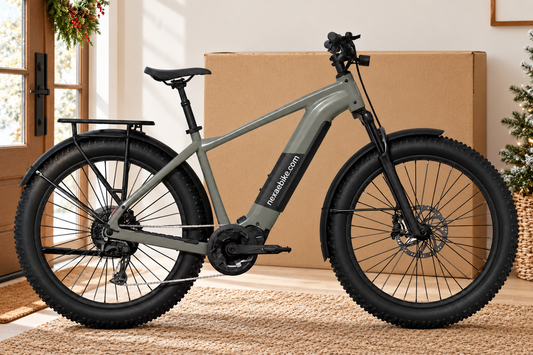
- The current listing specifies a 100Nm mid-drive motor and a removable 733Wh battery.
- It lists electronic AutoShift with a Shimano CUES 10-speed drivetrain.
- It offers Gray, Green and Blue variants in Regular and Large sizes; select the actual variant on the product page.
The Shimano CUES component name alone does not establish Shimano Di2, AUTO SHIFT or FREE SHIFT functionality. Use the bike manufacturer's controls documentation for this complete system. Likewise, an automatic feature does not establish a particular range, hill-climbing result or shifting quality for your route.

Compare cadence preference before chasing more automation
Aventon's support guidance describes a choice between automatic and manual shifting, cadence and torque settings, and app-based shift sensitivity. Higher sensitivity makes shifts more frequent. It also describes a torque-limit function that reduces motor torque during gear changes. Check the instructions for your bike and software before adjusting settings. Source: AutoShift Settings and Adjustments.
For a buyer, the important question is whether the system's choices feel predictable. One rider may prefer a steady, quicker pedal rhythm; another may want fewer gear changes. Neither preference is a universal quality score. Write down what feels wrong—pedaling too quickly, pushing too hard, or shifting too often—before deciding whether a setting change or a different bike is appropriate.
Cadence here means pedal revolutions per minute. It should not be confused with the broader choice between torque- and cadence-based motor assistance; our sensor guide explains that separate comparison.
A short test-ride checklist that isolates the controls
Ask the retailer to explain the controls while stationary, then use a suitable traffic-free test area. Follow the manufacturer's operating instructions. This checklist suggests observations, not a specific riding procedure or a claim about our own testing.
- Identify the settings before moving. Can you tell whether automatic gear selection is active? Can you distinguish it from the assistance setting?
- Establish a familiar baseline. Try the available manual-shift setting with retailer guidance. Note your preferred pedal rhythm and effort.
- Compare automatic gear selection. On the same suitable section, observe whether the gear changes support that rhythm. Keep other settings consistent where the system allows, so the comparison is meaningful.
- Observe transitions. During ordinary, controlled changes in pace, does the behavior feel understandable? Ask the retailer about anything unexpected rather than changing several parameters at once.
- Confirm the handover. Understand how to return to manual shifting and where to verify the current mode. Do not assume a shift-button press always has the same effect across brands.
- Record one preference. After stopping, note what you would change. Review the official adjustment options before another comparison.

Who should put automatic shifting high on the shortlist?
A rider who dislikes frequent gear decisions: prioritize a demonstration of automatic selection and an easy-to-understand manual option. A feature list cannot tell you whether the response feels natural to you.
A rider with a strong cadence preference: prioritize available adjustment and a representative test ride. More frequent shifting is not automatically a better match.
A rider who prefers choosing every gear: verify manual operation and the control layout before paying for additional automation. Automatic shifting can be a secondary option rather than your main reason to buy.
A buyer expecting less maintenance: ask who supports the electronic controls and conventional drivetrain. Automation does not remove the chain, cassette or derailleur from this bike, and it is not a maintenance-free transmission.
Questions to settle before checkout
- Which settings are accessible on the bike, and which require the companion app?
- What does a manual shift command do while automatic shifting is enabled?
- Which settings persist after switching the bike off?
- Where are the current operating instructions and software-support details?
- Who diagnoses a shifting issue, and which replacement drivetrain and electronic parts are supported?
Request answers for the exact model and software version. The questions above identify points to verify; they are not undocumented claims about this bike. Explore the AutoShift model and available variants, or compare other layouts in our fat-tire e-bike collection.
FAQ
Are AutoShift and Auto Mode the same thing?
No. In this manufacturer's terminology, one selects gears and the other changes motor support. Check both independently when comparing bikes.
Can I choose my own gears?
Aventon's AutoShift support article describes manual and automatic choices. Have the seller demonstrate the controls for your exact bike before your first ride.
Does a torque sensor mean the bike shifts automatically?
No. A sensor specification by itself does not establish an automatic gear-selection system. Look for explicit shifting functionality in the complete bike specification.
Does automatic shifting guarantee better battery range?
No range improvement is promised here. A useful range comparison needs consistent riding conditions and evidence specific to the bike; a control feature alone is insufficient.
Are these photographs evidence of a test ride?
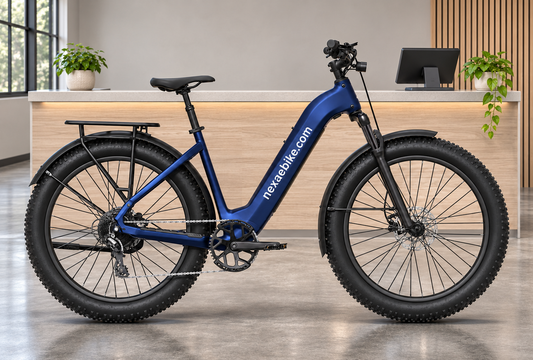
No. They are AI-generated editorial scenes based on this store's product images. The domain lettering is an image edit, not a statement about factory branding.
Sources and editorial scope
Checked October 29, 2026: the linked NexaEbike product listing; Aventon's Aventure M specifications and FAQ; and Aventon's AutoShift settings guidance. Manufacturer pages were undated when reviewed. This is an evergreen buying guide, not a report of a newly announced feature or rising search demand. Settings and availability may change; confirm the current model documentation.
Tags:
Previous
E-Bike Tire Pressure: Pump & Maintenance Buying Guide
Next
Adjustable E-Bike Stems: Handlebar Reach & Fit Guide
Related articles

Electric Trike Beginner Mode: A Buying Checklist
Nov 04 2026

E-Bike Maintenance Records: Build a Service Log
Nov 03 2026

E-Bike Price Tracking: Compare the Same Variant
Nov 02 2026