Mid-Drive vs Hub Motor E-Bikes: Gears, Hills & Service
Choose between a mid-drive and a hub motor by checking your route, shifting preferences and service plan—not by comparing one wattage number. A mid-drive sends assistance through the bicycle's drivetrain; a rear hub motor applies assistance at the rear wheel. That difference changes what you should ask about gears and maintenance.
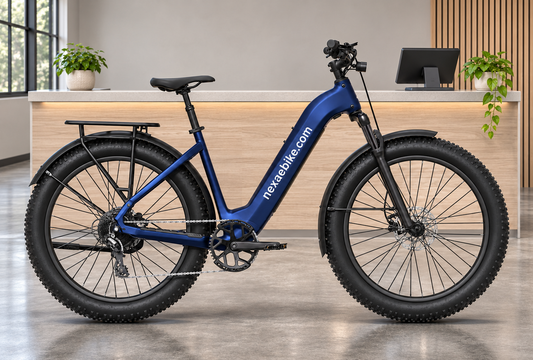
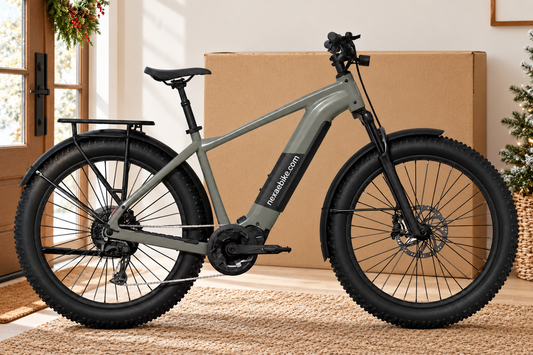
Below, two current NexaEbike fat-tire models both list a removable 733Wh battery and 26 × 4-inch tires. Their motor and shifting systems differ. This guide explains the purchase checks those differences create; it does not report a head-to-head hill test.

Start with the power path
In an October 28, 2026 technical explainer, motor manufacturer HENTACH describes a mid-drive sending output through the chainring, chain and cassette. The bicycle's selected gear is therefore part of the motor's path to the rear wheel.
With a rear hub motor, the motor drives the wheel while your pedaling still uses the bicycle's chain and gears. Changing gears remains useful for your legs, even though the motor does not drive through that same cassette ratio.
| Check | Mid-drive | Rear hub motor |
|---|---|---|
| Motor position | Near the crank area | In the rear wheel |
| Motor power path | Through the drivetrain | At the wheel |
| Shifting question | How do manual or automatic shifts work with assistance? | How comfortably can you select a gear for your own pedaling? |
| Service question | Who can check the chain, cassette and shifting system? | Who can service the motor wheel and its connections? |
These are layout differences, not a universal ranking. A useful demonstration is more specific than asking which motor is “best”: ask to see how the exact bike starts, shifts and resumes pedaling on a route like yours.
Compare two 733Wh fat-tire e-bikes
| Feature | Mid-drive fat-tire model | Connected step-over hub model |
|---|---|---|
| Product reference | Aventon Aventure M | Aventon Aventure 3 Step-Over |
| Store-listed motor | 100Nm; 250W sustained, 750W peak | 750W rear hub |
| Battery | Removable 733Wh | Removable 733Wh |
| Shifting | Shimano CUES 10-speed with electronic AutoShift | Shimano eight-speed trigger shifting, per manufacturer |
| Tires and front travel | 26 × 4 inches; 80mm fork | 26 × 4 inches; 80mm fork |
| Other purchase check | Throttle sold separately | Sensor Switch torque/cadence options; connected features subject to activation and service terms |
The motor figures use different labels. Comparing the mid-drive's 250W sustained figure against the hub listing's 750W headline alone would leave out the mid-drive's separately stated peak rating. Keep sustained and peak labels attached to their numbers, and ask for the exact specification when the basis is unclear.
Similarly, matching battery capacities do not establish matching range. This comparison has not controlled rider input, assistance settings, terrain, speed or conditions. It cannot tell you how many miles either bike will cover on your route.
Mid-drive example: check AutoShift as well as the motor
The 100Nm mid-drive fat-tire e-bike lists a 10-speed CUES drivetrain, electronic AutoShift, suspension seatpost and SRAM hydraulic disc brakes. It is worth shortlisting if understanding and using that shifting system is central to your purchase decision.
Aventon's Aventure M specifications list a 44-tooth chainring and an 11–39-tooth cassette. Its FAQ distinguishes automatic gear selection from Auto Mode, which adjusts motor support. They are different functions: one changes the selected gear, while the other concerns assistance.
Before purchase, ask for a demonstration of manual shifting, enabling and disabling AutoShift, and what the display indicates in each mode. Confirm the supplied firmware instructions and how the electronic shifting system is serviced. Having an automatic option does not remove the need to learn the controls.

Rear hub example: gears still matter for the rider
The 750W connected step-over fat-tire e-bike lists a rear hub motor, suspension fork and seatpost, hydraulic brakes and selectable torque/cadence assistance.
Aventon's Aventure 3 specifications identify eight-speed trigger shifting, a 48-tooth chainring and a 12–32-tooth cassette. This is a different drivetrain package from the mid-drive example, even before considering motor placement.
For a mostly paved, stop-and-go route, include it in a demonstration alongside the mid-drive. Check the effort needed at a comfortable cadence and whether changing gears feels straightforward. A rear hub does not mean the rider should leave the bike in one gear for every situation.

Three ownership questions to answer before deciding
1. What is the actual hill you need to ride?
Describe its length, stops, surface and the load you expect to carry. Ask to evaluate the complete bike under suitable, comparable conditions. A motor torque figure by itself does not establish wheel force or a pass/fail result for your hill; gearing and the rest of the bicycle also matter.
Aventon's model comparison, published August 19, 2026, explains that the mid-drive can use the bike's gearing on climbs. Treat that as an explanation of the design, not as a NexaEbike test result or a guarantee for an unspecified slope.
2. Who will maintain the drivetrain and rear wheel?
Kalkhoff's motor guide highlights chain and sprocket wear as a mid-drive consideration and rear-wheel tire work as a hub-drive consideration. That points to useful service questions, rather than a fixed maintenance bill.
Ask a service provider about inspection intervals, replacement-part availability and labor for the exact model. Do not assume a hub motor means maintenance-free ownership, or that a mid-drive chain must last a particular number of miles. This guide has no service-cost or wear test for these two bikes.
3. Which controls and equipment are included?
Confirm frame size, fit, shifting controls and the selected package. The mid-drive listing explicitly says its throttle is sold separately. Verify accessories before ordering rather than assuming a feature on another model comes in the box.
Motor placement and input sensing are separate checks. If selectable assistance is also part of your decision, the torque-versus-cadence sensor guide explains what those controls detect.
Frequently asked questions
Is a mid-drive always better than a hub motor?
No. Compare the complete bicycle, your route, control preferences and available service. Motor location alone does not decide the best fit for every buyer.
Can a hub-motor e-bike have normal bicycle gears?
Yes. The rear-hub example here has an eight-speed drivetrain for the rider's pedaling. Its motor applies assistance at the wheel.
Does AutoShift mean the same thing as automatic assistance?
No. On the referenced mid-drive model, automatic gear selection and Auto Mode for assistance are separate functions. Check how each is controlled on the supplied bike.
Do two 733Wh batteries guarantee the same range?
No. Capacity is only one part of the comparison. This guide has not measured range under matched conditions.
Browse the fat-tire e-bike collection with a shortlist of route and service questions. If battery removal and indoor care are also important, see the battery charging and storage guide.
Editorial note: Store facts and manufacturer references checked October 29, 2026, Beijing time (October 28 UTC). No independent hill, range or maintenance test is claimed. Images are AI illustrations based on current store product photos, with branding edited to nexaebike.com. They do not depict a performance test. Supplied branding, components and instructions are determined by the actual product and selected package.
Tags:
Previous
Winter E-Bike Battery Care: Charging & Storage Guide
Next
Electric Trike Buying Guide: Doorway Fit, Parking & Load
Related articles

Electric Trike Beginner Mode: A Buying Checklist
Nov 04 2026

E-Bike Maintenance Records: Build a Service Log
Nov 03 2026

E-Bike Price Tracking: Compare the Same Variant
Nov 02 2026