Torque vs Cadence Sensors: E-Bike Assistance Explained
A torque sensor measures your pedaling effort; a cadence sensor detects crank rotation. The controller uses that information to decide how the motor assists. Choose by how the complete bike responds to your input, rather than treating either sensor label as a guarantee of comfort, speed or range.
Some e-bikes let you select torque- or cadence-based assistance. That gives you two control styles to compare on the same bike, but it does not make every switchable system feel the same. This guide explains what to ask and shows three current NexaEbike configurations.

This week's motor news highlights an easy distinction to miss
In its October 22, 2026 Active Line Plus announcement, Bosch reported motor torque of up to 60Nm while also describing the role of sensors and software in assistance delivery. Those are different parts of the riding experience.
Motor torque is an output specification; torque sensing is an input measurement. A number in newton-metres does not tell you whether a bike detects your pedaling force, offers a cadence mode or uses the control settings you prefer. The NexaEbike products below are separate rear-hub-drive models; the Bosch announcement is context, not a claim that they contain that drive unit.
Torque versus cadence sensing: the practical difference
| System | Input it uses | What to compare |
|---|---|---|
| Torque-based assistance | Pedaling effort | How assistance responds when you press more or less firmly on the pedals |
| Cadence-based assistance | Crank rotation | How assistance begins and changes with light pedaling and different assist settings |
| Selectable torque/cadence mode | A supported choice between control styles | Whether you prefer one mode, how to identify it on the display, and any setup requirements |
Aventon's sensor explainer discusses the distinction between detecting rotation and detecting pedaling force. The sensor provides information; the controller's programming and the selected assist level affect what the rider experiences.
For a selectable example, Velotric describes SensorSwap on the Fold 1 Plus as a choice between torque and cadence sensing. That is a model-specific feature. Do not assume an e-bike can switch modes merely because its specification mentions a torque sensor.
Which control style should you shortlist?
If you want assistance to respond to your effort
Start by trying torque-based assistance. On a suitable demonstration bike, notice what happens when you gently increase pedal pressure, then ease off. Decide whether the response feels predictable at the speeds and effort levels you use.
Keep the bicycle's fit and gearing in the comparison. A saddle or gear that makes pedaling awkward can affect your impression even when the sensing system is working as intended.
If you prefer to pedal lightly
Try a cadence-based configuration or cadence mode on a supported bike. Compare the amount of assistance at a low setting, how it begins as you pedal, and how it responds when you stop pedaling. Check the controls rather than assuming every cadence system behaves like one you have previously ridden.
This is a preference question, not a claim that one sensor requires no effort in all circumstances. Your gear, selected assistance and route still matter.
If you are unsure which you prefer
A switchable model lets you compare both supported styles without changing the frame, tires or riding position. Follow that model's instructions and change settings while stopped when necessary. Confirm the mode shown on the display before comparing the feel.
Three in-store configurations to compare
| Configuration | Listed sensing setup | Battery | Tires |
|---|---|---|---|
| 750W dual-sensor step-through folder | Selectable torque and cadence | 608Wh | 20 × 3 inches |
| 750W Electric Blue step-through folder | Cadence | 608Wh | 20 × 3 inches |
| 750W connected step-through fat-tire bike | Sensor Switch torque/cadence assistance | 733Wh | 26 × 4 inches |
Dual-sensor folding model: compare two assistance styles
The dual-sensor step-through folding e-bike lists a 750W rear-hub motor, 75Nm motor torque, selectable torque and cadence sensing, a removable 608Wh battery and hydraulic disc brakes. The product reference is Velotric Fold 1 Plus.
This is a candidate when selectable assistance is a purchase priority. Confirm the control procedure and available settings for the supplied bike. Treat the 75Nm motor figure and the selectable sensing feature as two separate specifications.
Cadence folding model: compare a rotation-based setup
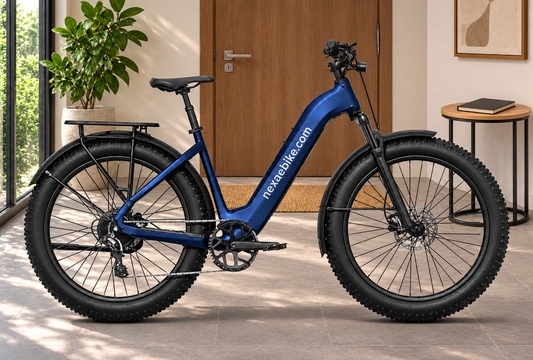
The 750W, 608Wh Electric Blue folding e-bike lists cadence sensing, a removable battery, 20 × 3-inch tires, a 60mm suspension fork and hydraulic disc brakes. The product reference is Velotric Fold 1; the manufacturer's Fold comparison also identifies it as cadence-sensing.
Its motor wattage and battery capacity match the other folder's listed figures, but those two numbers do not establish identical assistance behavior. Compare the actual controls, display, fit and sensing setup before deciding.

Connected fat-tire model: check Sensor Switch and setup
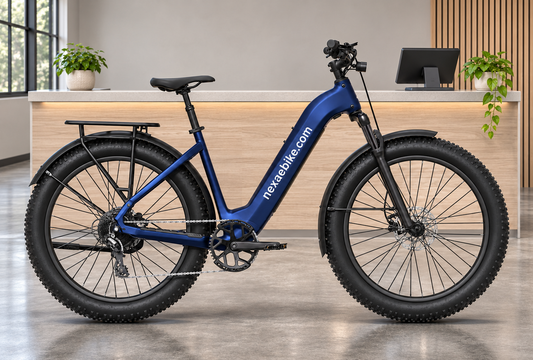
The 750W, 733Wh connected step-through fat-tire e-bike lists Sensor Switch, an 80mm suspension fork, a suspension seatpost and hydraulic disc brakes. The product reference is Aventon Aventure 3 Step-Through.
Aventon's firmware guidance identifies the Aventure 3 as a supported Sensor Switch model. That guidance dates from July 2025, not this week's news. Confirm the current firmware and supplied instructions rather than assuming a particular update is already installed.
This model also changes wheel size, tire width and suspension setup compared with the folding examples. Those differences mean it is not a controlled sensor-only comparison.

A useful demonstration checklist
- Identify the setting: note the active sensing mode and assist level before comparing anything.
- Start gently: in an appropriate traffic-free area, observe the initial assistance while following the demonstration provider's instructions.
- Vary pedal pressure: check how the supported torque mode responds when you press more or less firmly.
- Compare light pedaling: on a cadence configuration, observe the response at a low assistance setting.
- Observe the transition: notice what happens when you stop pedaling and use the controls as instructed.
- Change one setting at a time: keep gear, route and assist level as comparable as practical, and write down the differences you feel.
Ask which adjustments are user-accessible and whether a dealer or firmware update is needed. A useful answer should name the exact model and version, not make a promise about all torque or cadence systems.
Questions a sensor label cannot answer on its own
Range: sensor type alone does not establish energy use. Assistance level, speed, rider input, terrain, load, weather and battery condition all matter.
Throttle behavior: a throttle is a separate control. Cadence sensing is not another name for a throttle, and torque sensing does not tell you whether a throttle is fitted.
Motor layout: a rear-hub motor can be paired with torque sensing, as the dual-sensor folder illustrates. Do not infer sensing type solely from the motor's position.
Frequently asked questions
Is a torque sensor always better than a cadence sensor?
No universal winner follows from the label. Compare the bike's response, controls and fit against your riding preferences.
Is motor torque the same as a torque sensor?
No. Motor torque is an output specification, usually given in Nm. A torque sensor measures the rider's input to help control assistance.
Can I switch every torque-sensor bike to cadence mode?
No. The bike must explicitly support that feature. Check the exact model, firmware and instructions.
Will switching mode change my battery capacity?
No. A control setting does not change the battery's rated watt-hours. It may change how you ride and use assistance, so actual range still depends on the complete trip.
Explore commuter e-bikes to compare assistance setups alongside frame and fit. If folding storage is also important, use the folding e-bike measurement guide before ordering.
Editorial note: Store specifications and manufacturer references were checked October 28, 2026. This guide does not report independent response-time, range or safety testing. Images are AI scene illustrations based on actual listed products, with branding edited to nexaebike.com. Actual supplied branding and final specifications appear on the product pages.
Tags:
Previous
Compact vs Longtail Cargo E-Bikes: Grocery Run Guide
Next
E-Bike Tracking & Locks: GPS, Find My and Parking Guide
Related articles

Electric Trike Beginner Mode: A Buying Checklist
Nov 04 2026

E-Bike Maintenance Records: Build a Service Log
Nov 03 2026

E-Bike Price Tracking: Compare the Same Variant
Nov 02 2026