Compact vs Longtail Cargo E-Bikes: Grocery Run Guide
Choose a compact cargo e-bike when a shorter carrying layout suits your shopping and parking routine. Choose a longtail when you need more rear-deck space for compatible cargo equipment. Check weight limits separately: a longer rack does not automatically carry more weight, and the bike's total load rating is not the rear-rack rating.
For example, the compact and longtail 733Wh models compared below both list a 143lb rear-rack limit. The useful difference to investigate is the carrying layout, not an assumed increase in rack capacity.

From cargo-bike headlines to your weekly shopping trip
The International Cargo Bike Festival published its 2026 event recap on October 23. That is this week's publication; the festival itself took place earlier in the month. The organizer's programme announcement placed practical issues such as parking, maintenance and batteries alongside the vehicles.
For a household grocery run, those practical questions become very specific: what will you carry, what equipment holds it, and where can you park the loaded bike? This guide applies that approach to three current NexaEbike listings. It uses published specifications, not independent loaded-riding tests.
Compact versus longtail: start with the shape of your load
A compact cargo layout can be worth shortlisting for smaller regular errands and storage where overall bike dimensions matter. A longtail provides an extended rear carrying area to investigate when your intended bags or compatible cargo equipment need more deck space.
Measure the equipment and the complete bike rather than relying on the category name. A rack's length, width, mounting points and approved accessories determine what you can actually attach. Neither “compact” nor “longtail” guarantees that your existing panniers, basket or crate will fit.
| Your priority | What to investigate | What still needs checking |
|---|---|---|
| Small frequent grocery trips | A compact rear layout and compatible bags | Bag volume, attachment compatibility and weight limits |
| Bulky but not necessarily heavy shopping | A longer deck and suitable cargo equipment | Approved mounting, clearance and load distribution |
| Tight parking or a narrow entrance | Complete bike dimensions and turning space | Dimensions with your actual equipment installed |
| Heavier loads | Bike, rack and accessory ratings together | The maker's definition of total load and any configuration limits |
Three load limits you should read separately
- Total bike or system limit: read the manufacturer's definition. Different product descriptions may use “payload,” “total load” or “weight limit” differently.
- Rear-rack limit: this applies to the rack, not the combined rider-and-cargo allowance.
- Accessory limit: a bag, basket, adapter or mounting system may have its own lower limit.
All relevant limits must be respected at the same time. A stronger rack does not raise the bike's overall rating, and a high overall rating does not allow you to ignore a lower accessory limit.
One useful example of why definitions matter comes from Velotric's GoMad FAQ: it says the 500lb total payload includes the bike, rider, cargo and any passenger. Its separate rack figure is 176lb. Those numbers describe different constraints; the 500lb figure is not an allowance for groceries on the back.
Build a grocery-load worksheet
Weigh a representative shopping trip in its bags. Add the weight of the carrying equipment and note where each item will sit. Keep this record alongside the instructions for your exact bike and accessories.
| Item to record | Your figure | Check against |
|---|---|---|
| Rider and worn gear | _____ lb | Maker's total-load definition |
| Bike weight, if included in that definition | _____ lb | Exact supplied configuration |
| Rear-mounted bags, mounts and contents | _____ lb | Rack and accessory limits |
| Other attached equipment and cargo | _____ lb | Relevant mounting and overall limits |
| Required cargo volume and deck space | ________________ | Approved bag or basket dimensions |
For an arithmetic example, 30lb of groceries plus 8lb of rear-mounted carrying equipment equals a 38lb rear load. That calculation is only one part of the check: it does not verify the bike's total load, accessory approval or handling with that load.
Compare three current cargo e-bike configurations
| Configuration | Battery | Tires | Listed overall figure* | Rear-rack limit |
|---|---|---|---|---|
| Compact 750W cargo model | 733Wh | 20 × 3 inches | 440lb | 143lb |
| Longtail 750W cargo model | 733Wh | 20 × 3 inches | 440lb | 143lb |
| Fat-tire 750W cargo model | 801.6Wh | 20 × 4 inches | 500lb | 176lb |
*The listings use different overall-load wording. Confirm the exact definition in the applicable manufacturer's instructions before calculating the remaining allowance. These figures are not interchangeable rack capacities.
Compact 733Wh model: investigate the shorter cargo layout
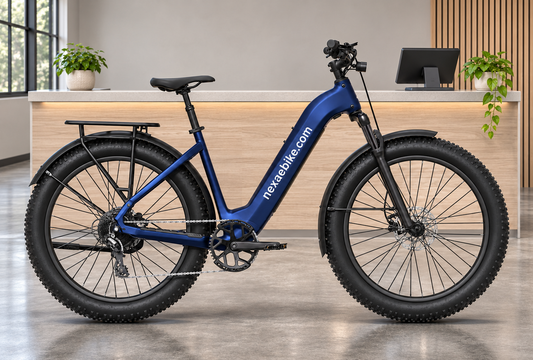
The compact step-through cargo e-bike lists a 750W motor, removable 733Wh battery, Shimano eight-speed gearing, a 50mm suspension fork and a 50mm suspension seatpost. Its rear rack and rear-wheel mesh guards are included. The product reference is Aventon Abound SR.
Start here if your intended carrying equipment works with the short rear layout. Check overall dimensions and how you will move it when parked: the listing gives an 80lb bike weight, so compact dimensions should not be read as a promise of easy lifting.
Longtail 733Wh model: compare rear-deck space
The longtail step-through cargo e-bike combines an extended rear rack with a 750W motor and removable 733Wh battery. Its listing includes a torque sensor, Shimano eight-speed drivetrain, hydraulic disc brakes, front suspension and a suspension seatpost. The product reference is Aventon Abound LR.
The rear-rack limit remains 143lb, matching the compact model's listed figure. Choose between these layouts by checking the space and approved mounting your shopping setup needs; do not buy the longer model expecting a higher stated rack limit.

801.6Wh fat-tire model: compare a different equipment package
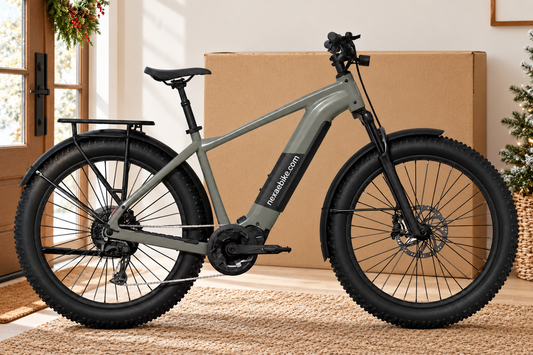
The 801.6Wh fat-tire cargo e-bike lists 20 × 4-inch tires, a 100mm front suspension fork, hydraulic disc brakes, torque and cadence sensing, a MIK HD-compatible rear rack and an included rack bag. The product reference is Velotric GoMad.
Its 176lb rear-rack figure is higher than the other two listings, but your chosen bag and mounting system still need their own compatibility and load checks. The larger battery is an energy-capacity difference, not a measured grocery-trip range advantage.

Check the shopping routine before choosing the bike
- Parking: identify a place where you can secure the bike and reach the bags without obstructing a walkway.
- Loading: follow the maker's instructions for supporting the bike and distributing the load. Check that bags and straps clear moving parts.
- Route: consider stops, hills and surfaces with the complete setup in mind. An empty-bike impression does not establish loaded handling.
- Equipment: confirm what comes with the bike. Panniers, baskets, adapters and passenger equipment are not automatically included because a rack is shown.
- Storage: check the complete length and width with equipment installed, including the approach and turning space.
This guide concerns grocery cargo. It does not establish approval for carrying a child or other passenger; those uses require the exact bike instructions and compatible equipment.
Frequently asked questions
Does a longtail cargo e-bike always carry more weight?
No. A longer rear carrying area does not establish a higher rating. The compact and longtail 733Wh models in this comparison both list a 143lb rear-rack limit.
Can I put the bike's full payload rating on the rear rack?
No. Read the separate rack rating and the manufacturer's definition of total load, then check accessory limits too.
Do I need a longtail for groceries?
Not necessarily. Weigh and measure your typical shop, then check which approved bags or baskets can carry it. A compact setup may suit small regular trips; bulkier shopping may justify investigating more deck space.
Does a larger battery guarantee more loaded range?
No. Watt-hours describe stored energy. Load, hills, assistance, speed, weather and the bike itself affect range.
Browse the cargo e-bike collection with your load worksheet ready. For the broader ride features, see the commuter e-bike guide; for measuring storage openings and handling routes, the storage planning guide explains the measurement process.
Editorial note: Specifications were checked October 28, 2026 against the linked store listings, with manufacturer references where stated. This is not an independent loaded-riding test. All article images are AI-generated scenes based on actual listed product images; branding has been edited to nexaebike.com. Actual supplied branding and specifications appear on the product pages. Illustrated scenes do not demonstrate load capacity.
Tags:
Previous
Will a Folding E-Bike Fit? Apartment & Car Storage Guide
Next
Torque vs Cadence Sensors: E-Bike Assistance Explained
Related articles

Electric Trike Beginner Mode: A Buying Checklist
Nov 04 2026

E-Bike Maintenance Records: Build a Service Log
Nov 03 2026

E-Bike Price Tracking: Compare the Same Variant
Nov 02 2026