Dual vs Single Battery E-Bikes: Capacity & Charging Guide
A factory dual-battery e-bike can offer more nominal battery energy, but compare the charging routine and complete bicycle as well as the capacity number. Two packs do not automatically establish twice the riding range, a single shared charging port or compatibility with batteries from another model.
This guide compares two current NexaEbike listings: a moped-style model with two 52V 20Ah packs and a single-battery model with one 52V 20Ah pack. It explains the figures and the questions to resolve before buying. No independent range or charging-time test is claimed.

52V 40Ah versus 52V 20Ah: compare the energy
Jasion's battery guide explains the difference between voltage, amp-hours and watt-hours. For a nominal-energy estimate, multiply the stated voltage by amp-hours:
- One 52V 20Ah pack: 52 × 20 = 1,040Wh.
- Two such packs: 1,040 + 1,040 = 2,080Wh combined nominal energy.
These calculations describe the listed capacity. They do not measure energy delivered under a particular ride, battery condition or temperature. The 52V 40Ah combined label also does not mean either individual pack is a 40Ah pack.
Keep voltage, individual-pack capacity, pack count and total Wh on the same comparison sheet. Amp-hours alone are an incomplete way to compare systems at different voltages.
Two current store examples
| Item | Dual-battery moped-style model | Single-battery retro model |
|---|---|---|
| Product reference | Jasion RetroVolt Max | Jasion RetroVolt Pro |
| Listed battery configuration | Two 52V 20Ah packs | One 52V 20Ah pack |
| Nominal energy | 2,080Wh combined | 1,040Wh, calculated from 52V × 20Ah |
| Suspension | Full suspension | Front and rear suspension |
| Tires | 20 × 4 inches | 20 × 4 inches |
| What capacity does not tell you | Exact route range, charging-port behavior, complete carrying weight or the supplied accessory package | |
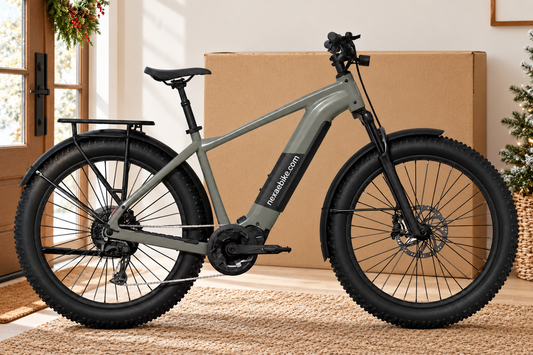
The dual-battery model is worth comparing when a larger factory battery configuration is part of your shortlist. The single-battery model provides a contrasting configuration with a long saddle, raised handlebar and round headlight.
Both store listings offer Venom Green and Shadow Steal color options. Compare their exact equipment rather than treating the second battery as the only difference between the complete bicycles.

What the manufacturer confirms—and what still needs checking
Jasion's RetroVolt Max article, dated August 3, 2026, distinguishes the Max's combined 52V 40Ah system from the Pro's single 52V 20Ah pack. This is model documentation, not a new launch announced this week.
The current manufacturer product page also lists two 52V 20Ah batteries. That supports the pack-count comparison. It does not make the manufacturer's promotions, accessory offers or delivery terms part of a NexaEbike order; check the selected store package separately.
For a useful purchase inquiry, ask which battery and charger labels match the supplied configuration. The model name, voltage and capacity should be checked together with the actual equipment and instructions.
Two batteries do not automatically mean two chargers
The RetroVolt Max manual linked from Jasion's official support page lists one charger in its package table on printed page 4. Its printed pages 14–17 illustrate battery removal and charging a pack either on or off the bike.
Those illustrations do not establish that connecting one charger to one port charges both fitted packs simultaneously. Confirm the supplied charger's quantity and label, the approved method for each pack, and how completion is checked. Do not infer a shared charging workflow just because the bicycle carries two batteries.
Jasion's general battery guidance likewise says to follow the exact model's instructions and not assume that two batteries can be mixed or charged together with one charger. This guide does not recommend adapters, electrical modifications or a substitute charger.

A charging-routine checklist before ordering
- Confirm the package: how many battery packs and approved chargers are supplied with the selected bike?
- Identify the instructions: which manual and version match the delivered battery system?
- Ask about the ports: how is each fitted pack charged, and what does each indicator report?
- Check removal and handling: ask for a demonstration of the approved removal and reinstallation method before planning indoor charging.
- Plan the location: identify a suitable charging place for the actual equipment and the matching instructions.
- Check timing: clarify whether any quoted time refers to one pack or the complete system, and under what starting conditions.
For example, a buyer who can supervise one charging session each evening needs to understand the complete routine, not just read a generic “charging time” headline. A second buyer who keeps the bicycle in a separate storage area should resolve battery carrying and access before assuming removal will be convenient.
Why 2,080Wh is not a promise of double the miles
Jasion’s dual-battery guide also distinguishes capacity from riding range. A capacity comparison and a route-range comparison answer different questions. The arithmetic above shows twice the nominal energy of one 52V 20Ah pack. It does not establish the energy each complete bike will use per mile on your journey.
Ask for the conditions behind any range claim, including assistance use, route, rider and load. This guide has not tested these two bikes under matched conditions, so it does not assign them a comparative mileage result or estimate how many days you can ride between charges.
Also ask for the complete bike's weight and dimensions with the supplied equipment. The second pack is only one part of a different whole-bicycle configuration; subtracting generic battery weights from a catalog figure is not a reliable carrying plan.
Factory dual batteries versus carrying a spare
A factory two-pack configuration and a single-pack bike with a spare are different purchase arrangements. If a spare is important, establish whether an approved replacement exists for the exact model and how the matching instructions permit it to be used. Do not assume a Pro can be converted into a Max by adding a pack.
Likewise, this capacity comparison does not confirm operation with one pack removed from the dual-battery model. Resolve that question against the supplied system's instructions before relying on such a routine.
Frequently asked questions
Is 52V 40Ah the capacity of each battery?
For the dual-battery store example here, it is the combined label for two 52V 20Ah packs. Each pack's stated nominal energy is 1,040Wh; together they total 2,080Wh.
Will the dual-battery model go exactly twice as far?
That is not established by the capacity arithmetic. A matched range test would need to account for the complete bikes and riding conditions.
Do two packs mean two chargers are included?
Do not assume so. The referenced Max manual lists one charger. Confirm the selected package and approved routine before purchase.
Can I connect a similar-looking spare battery?
Appearance and nominal voltage alone do not establish compatibility. Obtain model-specific approval and instructions rather than trying an unverified combination.
View the dual-battery specifications alongside the single-battery configuration. For seasonal care, the battery charging and storage guide explains why temperature instructions also need to match the model.
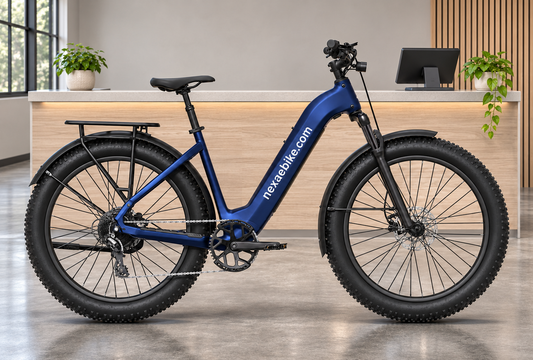
Editorial note: Store facts and manufacturer references checked October 29, 2026, Beijing time (October 28 UTC). No independent battery, range or charge-time test is claimed. Images are AI scenes based on current store product photos, with branding edited to nexaebike.com. They show installed battery configurations, not wiring or charging instructions. Supplied branding, accessories and instructions are determined by the selected product package.
Tags:
Previous
Electric Trike Buying Guide: Doorway Fit, Parking & Load
Next
20 vs 26-Inch Fat-Tire E-Bikes: Frame Fit Buying Guide
Related articles

Electric Trike Beginner Mode: A Buying Checklist
Nov 04 2026

E-Bike Maintenance Records: Build a Service Log
Nov 03 2026

E-Bike Price Tracking: Compare the Same Variant
Nov 02 2026