Winter E-Bike Battery Care: Charging & Storage Guide
For winter e-bike ownership, check where you can charge and store the battery before choosing the bike. A removable battery can make indoor care more practical, but cold-weather charging limits and long-term storage settings still come from the instructions for that exact model.
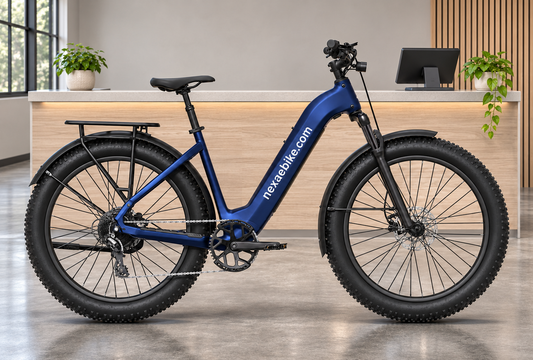
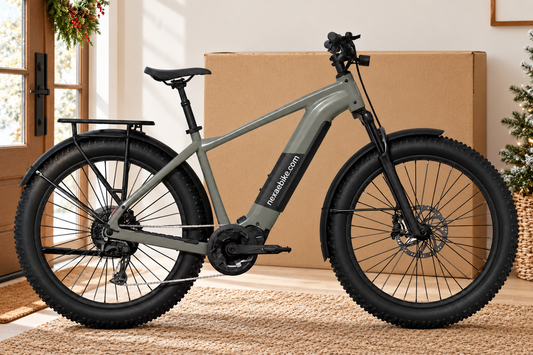
This guide uses two current NexaEbike examples—a 627Wh step-through cruiser and a 374Wh mid-step commuter—to turn winter battery questions into a buying checklist. It does not report a cold-weather range test.

Why check winter battery instructions now?
A European manufacturer article dated October 22, 2026 addresses cold-weather charging and storage. It is a timely seasonal topic, but another brand's storage percentage or temperature limit is not a specification for the bike you buy here.
For a US buyer comparing an apartment bicycle room, a detached garage and a daily commute, the useful question is concrete: can you follow the supplied battery instructions in the place where you actually keep the bike?
Charging, storage and riding are three different checks
| Situation | What to verify | Buying implication |
|---|---|---|
| Charging | Permitted temperature, approved charger and an appropriate dry location | Confirm whether the battery can be charged off the bike |
| Long-term storage | Storage temperature, charge level and checking schedule | Identify a suitable place for both the battery and the remaining bike |
| Riding | Operating limits, route conditions and usable range for your journey | A battery capacity number alone does not establish winter range |
A bike being able to turn on outdoors does not establish that its battery should be charged there. Likewise, removing the battery does not make an unsuitable damp or freezing storage location appropriate for the rest of the bicycle.
A model-specific example: Breeze 1 charging and storage
The Velotric Breeze 1 owner's manual, in its printed pages 22–25, allows charging with the battery installed or removed and specifies a charging environment of 50–86°F (10–30°C). It describes charging protection below 32°F (0°C) or above 113°F (45°C), and says to let the battery adjust to room temperature for at least one hour before trying again.
Its printed pages 89–91 specify a clean, dry, ventilated storage environment of 50–77°F (10–25°C). For long-term battery storage, the manual says to remove and disconnect the battery, maintain 60–80% charge and recharge if it drops below 60%.
Those are instructions from the referenced manual, not universal limits for all e-bikes. Confirm that the manual supplied with your bike matches the battery and version you receive. Protection cutoffs also do not replace the manual's recommended charging conditions.
Two removable-battery bikes to compare
| Listed feature | 627Wh step-through cruiser | 374Wh mid-step commuter |
|---|---|---|
| Product reference | Velotric Breeze 1 | Velotric Tempo Mid-Step |
| Motor | 750W rear hub | 350W rear hub |
| Battery | Removable, listed at 627Wh | Removable, listed at 374Wh |
| Frame access | Step-through | Mid-step |
| Drivetrain and brakes | Eight-speed, hydraulic disc brakes | Eight-speed, hydraulic disc brakes |
| Before purchase | Check battery removal, carrying comfort, charging instructions and the actual storage location | |
627Wh step-through cruiser: check the battery routine and accessories
The 750W step-through cruiser lists a rigid aluminum fork and torque/cadence sensing. A low frame opening may suit your preferred mounting routine, but you should still check fit and handling yourself.
The rack and fenders pictured in this guide are optional accessories shown on the reference product photograph. Confirm the chosen package rather than assuming that every pictured item is included. The quoted battery capacity is the listing's specification; it is not a measured amount of winter riding energy.

374Wh mid-step commuter: check handling separately from capacity
The 350W mid-step commuter lists a removable 374Wh battery, torque/cadence sensing and 700 × 42c tires. It is another option for buyers who want to compare a city-oriented frame and battery arrangement.
The official Tempo owner’s manual also permits charging in or out of the bike and specifies 50–86°F (10–30°C) for charging. Its long-term storage section specifies 50–77°F (10–25°C), a 60–80% battery charge and recharging below 60%. Check the current manual resource against your supplied frame version before adopting those instructions.
The capacities differ, but that does not provide a reliable winter mileage comparison. Rider input, route, conditions and assistance settings are additional questions to resolve; this guide has not tested these bikes under matched conditions.

Before buying: walk through your storage and charging plan
- Check the location: compare actual temperature and moisture conditions with the supplied instructions, including the place where the bike stays after battery removal.
- Ask for a removal demonstration: confirm the key, latch, clearance and how to support the battery. Do not assume two batteries with similar capacities use the same mechanism.
- Check carrying comfort: assess the battery separately from the whole bicycle. A lighter bike does not automatically establish that its battery is easier for you to grip.
- Confirm off-bike charging: check the matching battery, charging port and approved charger. Avoid choosing a replacement solely because its connector appears to fit.
- Keep the matching instructions: record the manual version and support contact alongside the serial number and purchase details.
- Plan for time away: identify the required storage charge level and checking schedule before putting the bike away for weeks.
For example, a rider with a dry indoor bicycle room may have a different routine from a rider whose detached garage falls below the stated storage range. The latter should resolve storage for the entire system before buying; carrying the battery indoors answers only part of that question.
Why this guide does not give one storage percentage for every brand
Aventon's battery-storage support page specifies 75–80% charge for long-term storage, monthly checks and keeping its batteries off the charger and off the bike. That is a different instruction from the Breeze 1 manual cited above.
The practical lesson is to use the current instructions for your own battery rather than averaging advice from multiple brands. If documentation conflicts with the supplied manual, ask support to resolve the exact model and version before acting.
Frequently asked questions
Can I charge my e-bike battery in a cold garage?
Only if the location and battery meet the conditions in the matching instructions. For the referenced Breeze 1 manual, the specified charging environment is 50–86°F (10–30°C).
Does a removable battery make the whole bike winter-proof?
No. You must also follow storage and use requirements for the frame, electrical components and other parts. Removal is a convenience feature, not a promise of weather resistance.
Should every e-bike battery be stored at the same percentage?
No. The cited manufacturer instructions differ. Use the instructions for the exact battery rather than a generic percentage from another model.
Does a larger Wh number guarantee enough winter range?
No. Battery capacity is one specification. Check your route and operating conditions and leave a practical reserve; this guide does not provide measured winter mileage.
Explore the commuter e-bike collection with this checklist. If access through doors or into a car is also important, the folding e-bike storage guide covers measurements to check separately.
Editorial note: Listing facts and official references checked October 28, 2026. This is a buying and documentation guide, not a winter performance test. Images are AI scenes based on current store product photos, with branding edited to nexaebike.com. Breeze 1 rack and fenders shown are optional. Supplied branding, equipment and instructions are determined by the actual product and selected package.
Tags:
Previous
E-Bike Tracking & Locks: GPS, Find My and Parking Guide
Next
Mid-Drive vs Hub Motor E-Bikes: Gears, Hills & Service
Related articles

Electric Trike Beginner Mode: A Buying Checklist
Nov 04 2026

E-Bike Maintenance Records: Build a Service Log
Nov 03 2026

E-Bike Price Tracking: Compare the Same Variant
Nov 02 2026