Cargo E-Bike Route Planning: Barriers, Access and Stops
Before choosing a cargo e-bike for regular errands, check the complete route from your storage space to each destination. Look beyond distance: gates, chicanes, steps, tight turns and the final approach to parking can determine whether a trip works with the actual bicycle and its accessories.
This is an access-planning checklist, not a route clearance guarantee, a loaded handling test or advice that a particular path permits your bike.

Explore longtail specifications and variants
Why a short route can still be awkward
Active Travel England’s access-barrier guidance identifies poorly designed chicanes as a potential obstacle for larger or non-standard cycles, including cargo bikes. A route that is convenient on an ordinary bicycle may therefore need a different access check for your intended setup.
Start with the journey you actually intend to make, including the exit from home and the final approach to each stop. Do not assume a cycling line on a map documents every gate, opening or turning space.
Make a route access log
| Location | What to check | What to record |
|---|---|---|
| Home exit | Doors, corners and steps | Actual opening and maneuvering space |
| Path entrance | Gates, bollards or chicanes | Approach, gap and turn sequence |
| Route connection | Stairs, tight turns or unsuitable surfaces | An alternative connection to investigate |
| Destination | Entry and suitable parking access | Whether the complete setup can reach it |
| Return route | Different access direction or opening arrangements | Any issue that affects getting home |
Use the exact assembled bicycle’s dimensions with the intended accessories. Overall length, handlebar width and the space needed to turn answer different questions. A straight gap measurement alone does not prove a bicycle can negotiate a staggered barrier.

Explore longtail specifications and variants
Use routing tools as a starting point
Geovelo’s official cargo-routing help, updated April 15, 2025, describes a cargo-bike mode intended to avoid routes with barriers. This is standing product guidance, not a new feature announcement. Check whether the tool covers your area and review its suggestion against the access points that matter to your trip.
If a route detail is uncertain, inspect it from an appropriate safe location or seek current information from the site operator before relying on it. A routing mode is not a physical measurement or permission to use a path. Do not force a bicycle through a barrier or improvise a lift with a load just to preserve the shortest route.
Apply the check to a longtail configuration
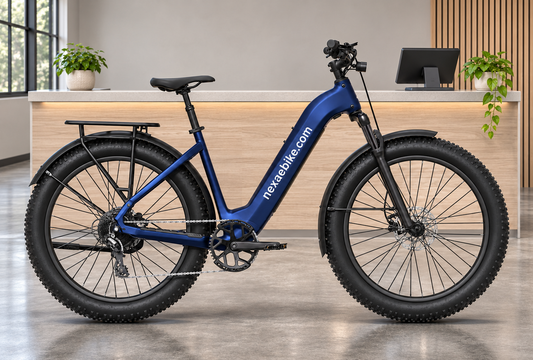
Our longtail step-through cargo e-bike is listed with a 750W motor, removable 733Wh battery and extended rear rack. Its product reference is Aventon Abound LR. The longer carrying layout is a reason to investigate turning and destination access; the word “longtail” does not supply the measurements needed for your route.
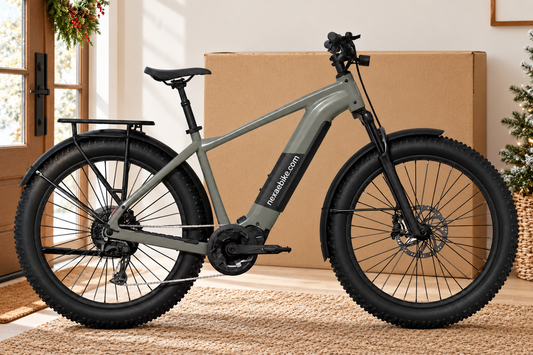
Request confirmed dimensions for the selected configuration and any carrying equipment you intend to add. The illustrations show an unloaded product and do not establish how it fits a specific gate or handles with cargo. Keep load limits and accessory compatibility as separate checks using the cargo layout and grocery guide.

Explore longtail specifications and variants
Plan two stops and a fallback
For a hypothetical grocery-and-parcel trip, note the approach to the first store, the connection to the second stop and the route home. At each stop, check that you can reach appropriate parking without obstructing other users. Identify an alternative destination or route if an entrance is closed or the intended access is unavailable.
Keep a short dated note for any access point that may change, such as a gate controlled by opening hours. Recheck conditions after construction or a route change. For supporting the parked bike, use the separate cargo kickstand guide; route access does not establish stand capacity.
Frequently asked questions
Does cargo-bike navigation guarantee that my bicycle fits?
No. Use its suggestion to plan, then verify uncertain access points against the actual bicycle and setup.
Is handlebar width the only measurement I need?
No. Length, accessories, the approach angle and turning room also matter, particularly at staggered barriers.
Does this guide confirm where I can legally ride?
No. Check current local rules and site access conditions separately for your exact bicycle.
Should I choose the shortest mapped route?
Compare practical access and an appropriate alternative. A shorter distance does not establish a suitable connection through every entrance.
Sources checked November 3, 2026. The linked official resources are standing guidance, not evidence of a newly introduced rule. Images are AI-generated product scenes, not measured route trials or load tests.
Tags:
Previous
Connected E-Bike Plans: Activation and Renewal Checklist
Next
E-Bike Maintenance Records: Build a Service Log
Related articles

Electric Trike Beginner Mode: A Buying Checklist
Nov 04 2026

E-Bike Maintenance Records: Build a Service Log
Nov 03 2026

E-Bike Price Tracking: Compare the Same Variant
Nov 02 2026